
What Blood Pressure Numbers Mean
This information has been reviewed and approved by Minisha Kochar, MD (April 2026) .
What Blood Pressure Numbers Mean
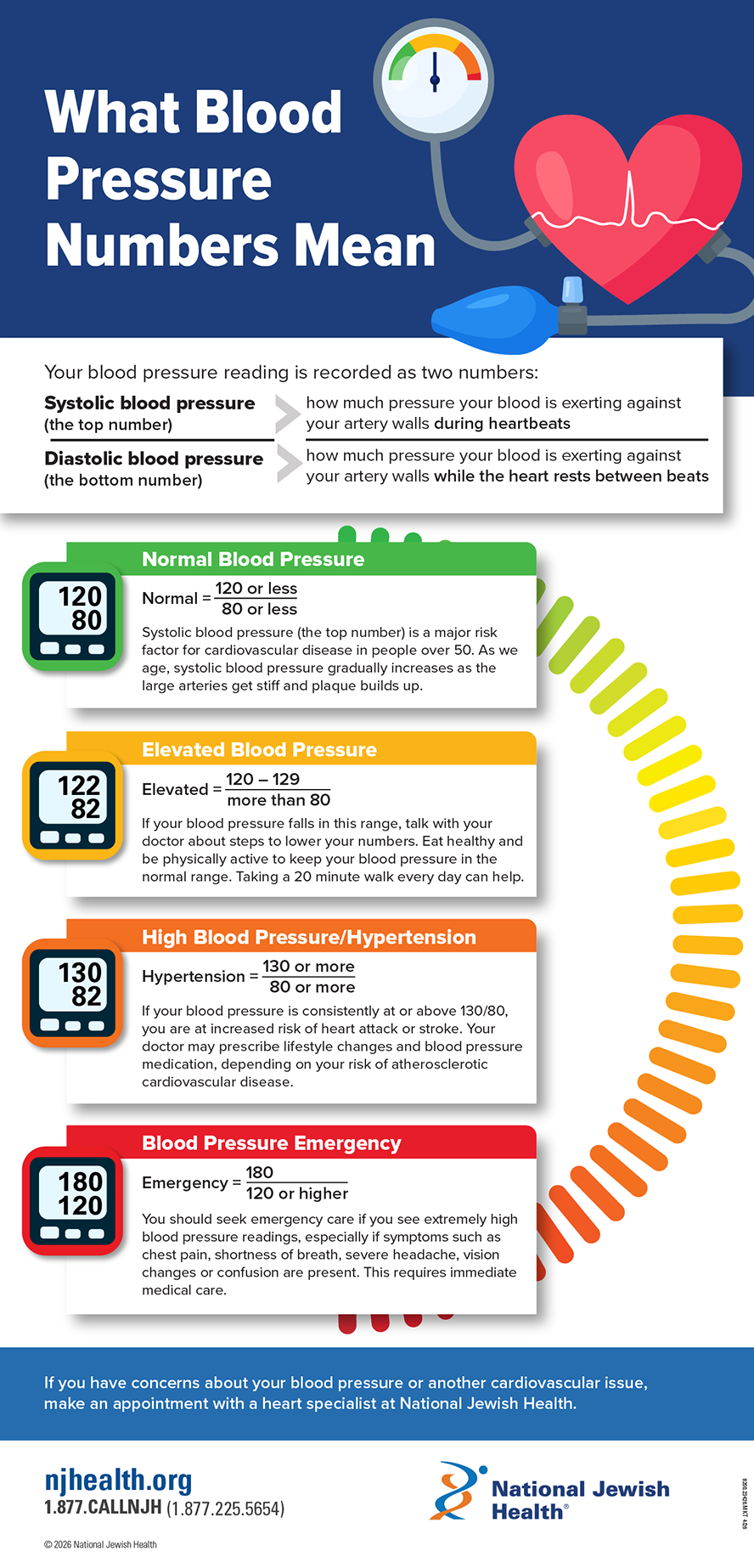
Your blood pressure numbers tell an important story about your heart health. This quick guide breaks down what your blood pressure readings mean and when it’s time to take action.
Your blood pressure reading is recorded as two numbers:
- Systolic blood pressure (the top number) — how much pressure your blood is exerting against your artery walls during heartbeats
- Diastolic blood pressure (the bottom number) — how much pressure your blood is exerting against your artery walls while the heart rests between beats
Normal Blood Pressure
Normal = 120 or less /80 or less
Systolic blood pressure (the first number) is a major risk factor for cardiovascular disease in people over 50. As we age, systolic blood pressure gradually increases as the large arteries get stiff and plaque builds up.
Elevated Blood Pressure
Elevated = 120 – 129 /more than 80
If your blood pressure falls in this range, talk with your doctor about steps to lower your numbers. Eat healthy and be physically active to keep your blood pressure in the normal range. Taking a 20 minute walk every day can help.
High Blood Pressure/Hypertension
Hypertension = 130 or more /80 or more
If your blood pressure is consistently at or above 130/80 mm Hg, you are at increased risk of heart attack or stroke. Your doctor may prescribe lifestyle changes and blood pressure medication, depending on your risk of atherosclerotic cardiovascular disease (ASCVD).
Blood Pressure Emergency
Emergency = 180/120 mm Hg or higher.
You should seek emergency care if you see extremely high blood pressure readings, especially if symptoms such as chest pain, shortness of breath, severe headache, vision changes or confusion are present. This requires immediate medical care.
If you have concerns about your blood pressure or another cardiovascular issue, make an appointment with a specialist at National Jewish Health.
Want to use this on your website? Fill out the content usage request form and then copy this code:
https://www.nationaljewish.org/NJH/media/pdf/R2B_Blood-Pressure-Infographic.pdf