
Women & Autoimmune Disease
Women account for 80 percent of patients with autoimmune diseases such as lupus and rheumatoid arthritis.
Why Do Women Suffer More Than Men?
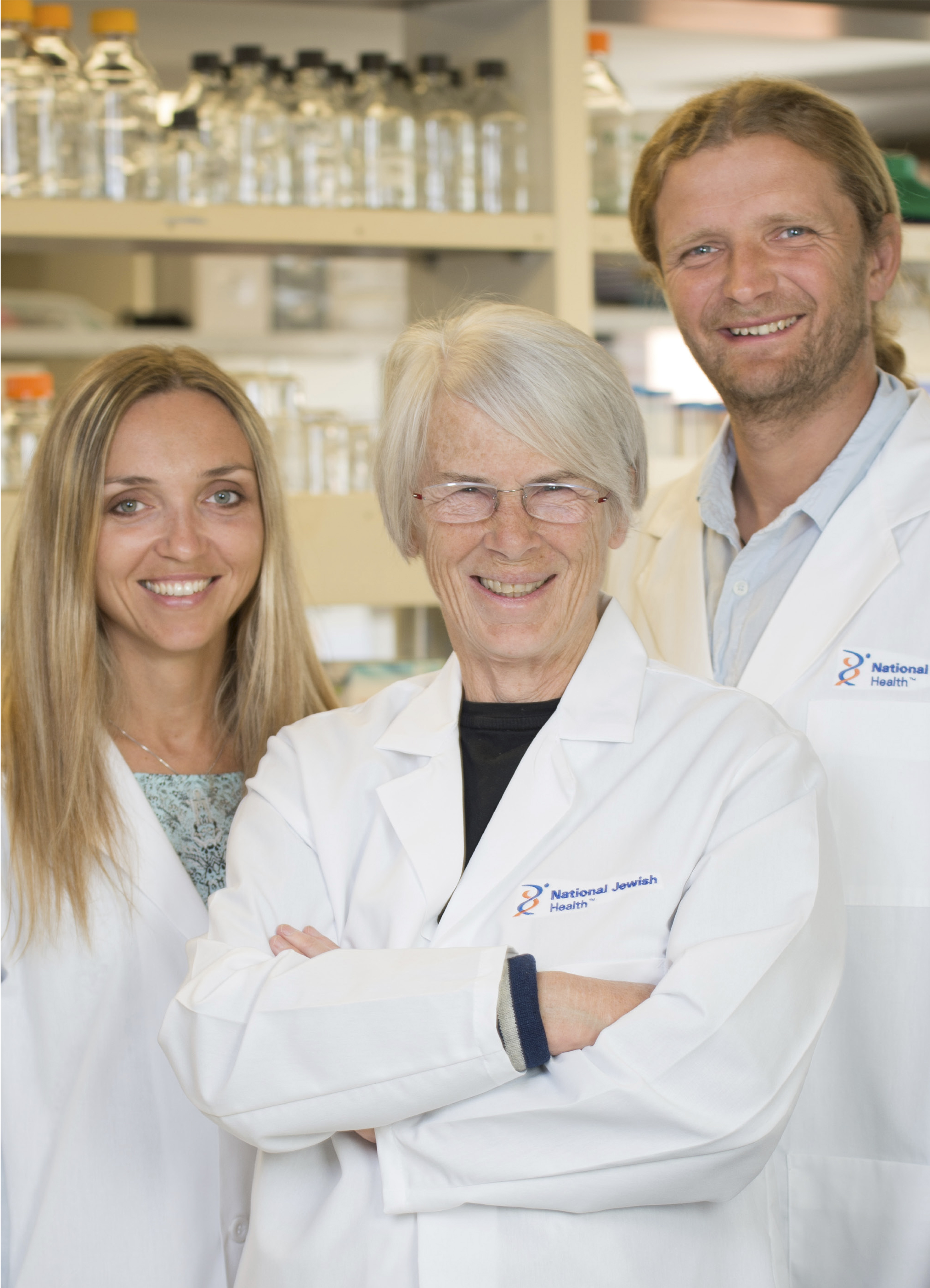 Women account for 80 percent of patients with autoimmune diseases such as lupus and rheumatoid arthritis. Researchers at National Jewish Health have discovered an immune cell that accumulates in females and those prone to autoimmune diseases. Understanding why and how these “Age-associated B Cells” arise could lead to new therapies for autoimmune diseases, which currently have no cure.
Autoimmune Disease – Self-Defense Gone Wrong
Autoimmune disease occurs when a person’s immune system malfunctions and starts attacking its own body instead of defending it. Autoimmune diseases such as rheumatoid arthritis, lupus and multiple sclerosis afflict more than 23 million mostly older adults in the United States. Women account for about 80 percent of patients with autoimmune disease.
Philippa Marrack, PhD, explains more:
New Cells in Suspicious Neighborhoods
Researchers discovered a unique set of cells in older female mice, which they called Age-associated B Cells, or ABCs. They found those same ABCs in mice prone to autoimmune disease and in women with autoimmune disease. At the time, what ABCs do was unclear.
Kira Rubtsova, PhD, explains more in this YouTube video.
Cost of a Better Defense?
The National Jewish Health researchers discovered thajeat ABCs are part of a healthy immune response. Women are better than men at fighting viral infections, in part because they have more ABCs. That stronger viral defense, however, makes women more susceptible to autoimmune disease, when ABCs malfunction.
Kira Rubtsova, PhD, explains more in this YouTube video.
Therapeutic Promise
 Today, there is no prevention or complete cure for autoimmune diseases, although there are medications that inhibit the symptoms. When National Jewish Health researchers removed ABCs from mice with autoimmune disease, the mice got better. It is a long way from mice to the clinic, but ABCs hold promise for a new approach to autoimmune diseases such as lupus, rheumatoid arthritis and multiple sclerosis, which strike women more often than men.
Anatoly Rubtsov, PhD, explains more in this YouTube video.
 Clinical Trials